-
 This course provides insurance professionals with a comprehensive understanding of ethics and fraud within the insurance industry, with a focus on California anti-fraud requirements. It examines unethical behaviors, common fraud schemes, and the impact of fraud on consumers, insurers, and the marketplace. You will gain practical insight into how fraud occurs, how it is identified, and how regulatory bodies - such as the California Department of Insurance Fraud Division - investigate and address fraudulent activity.
 -
 Ethics & Fraud for Adjusters Unethical behaviors and fraud awareness are the keys to this course. The entire course talks about ethics and fraud with a multitude of examples and definitions to sharpen adjusters’ knowledge and awareness in this area, both personal and professional. It details lots of specific acts and a wide variety of fraud, scams, and schemes that are only intended to “rip off” you, me, our families, and friends A review of the table of contents shows that, in seven specific lessons, all the material is designed and intended to contribute to an adjuster’s understanding of the wide expanse of fraud.
 -
 The course is designed to provide students with continuing education in the area of ethics. It pays special attention to the various components and issues specific to the world of ethical approaches and behavior in the vast emerging senior marketplace. It enhances the ethical and professional competence of financial and insurance professionals aspiring to make ethics a cornerstone of their personal mission, as well as to fulfill their state continuing education requirements.
 -
 Insurance is a tool for shifting risk to protect the insured. And when it’s put into practice—or disputed—it’s often done through the courts. No matter what type of insurance you sell, you need to know the basics of the laws and regulations that affect your policies.
 -
 Effective agency operations depend on the accurate use of an Agency Management System. Every premium collected, commission calculated, claim tracked, carrier reconciled, and policy issued flows through this central platform. When used properly, the system strengthens financial controls, improves reporting accuracy, enhances client service, and reduces exposure to compliance and E&O risk.
 -
 This course is designed to meet the life insurance training requirements of California Senate Bill SB 263. It examines the available types of individual life insurance policies, including ordinary whole life insurance, limited payment life insurance, single payment life insurance, variable life insurance, non-variable universal life insurance (including indexed universal life insurance), variable universal life insurance, endowments, and disability benefits in individual life insurance policies. It also examines accelerated death benefits, the common provisions and exclusions found in life insurance policies, and life settlements.
 -
 This course is designed to meet the variable life insurance training requirements of California Senate Bill SB 263. It provides a comprehensive overview of the structure, features, and regulatory requirements surrounding variable life insurance products. It covers key concepts such as death benefit options (Option A and Option B), cash value accumulation, premium flexibility, and net amount at risk (NAR).
 -
 According to Investopedia, "a public adjuster is an insurance industry professional whose job is to assist the policyholder in making a claim from an insurance company. They represent the insured rather than the insurer. Independent adjusters and company adjusters work for insurance companies.
 -
 Property/casualty insurance is insurance on homes, cars, and businesses. Technically, property insurance protects a person or business with an interest in physical property against its loss or the loss of its income-producing abilities. Casualty insurance mainly protects a person or business against legal liability for losses caused by injury to other people or damage to the property of others.
 -
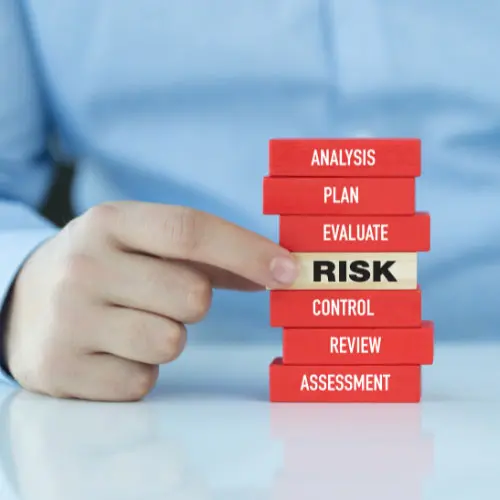 Every business enterprise today is subject to a wide range of physical, legal, and economic risks. Each of these risks are rigorously scrutinized by an enterprise itself and its various stakeholders, including shareholders, lenders, suppliers, distributors, buyers, employees, and others. Given the scope of these interests, virtually no type of risk is overlooked.
 -
If you own anything, you are subject to the risk that your property will be damaged or destroyed, or lost or stolen, or rendered unusable for some reason. The modern property/casualty insurance industry arose from “fire” insurance for tangible property at fixed locations on land, and from “marine” insurance for tangible property in transit, either on land or water. Today, property risk and insurance are being fundamentally transformed with the growth of intangible property, principally data and information on computer networks.
-
To be at all active in a modern society, you cannot avoid liability risk. No matter what you do for a living or how much or how little you own, if you’re a mentally competent adult of majority age, you can be held liable for any damage or injury you cause to another. This course first covers the general liability we all face for any bodily injury (including disease), property damage (to tangible or intangible property), or personal injury (to another’s rights or reputation).
State-Approved Insurance CE · Instant Scoring · Fast Credit Reporting
Courses are developed by industry experts and cover a wide range of state-mandated and general topics, and we’re more affordable than traditional classes and many other online providers!
Quick Links
My Account
Company
©2026 FastrackCE, LLC. All rights reserved.